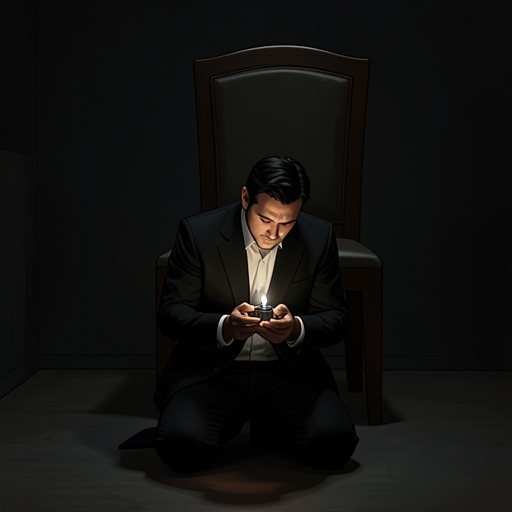
Batman faked his death
Batman the Dark Knight Returns 10th Anniversary Edition HardcoverBatman’s staged death is the decisive final maneuver of Bruce Wayne’s campaign in Gotham City: after years of retirement, renewed violence, confrontation with the state, and battle with Clark Kent / Superman, he makes the world believe that Batman has died. The act is not surrender but transformation. By replacing a hunted public symbol with a hidden survivor, Bruce Wayne protects the mission from immediate institutional retaliation and prepares a clandestine network through which the work can continue.
Causes and Strategic Purpose
Batman’s deception follows a sustained escalation between Bruce Wayne and the authorities of Gotham City. His return has already challenged the assumption that Batman belongs to the past, while the Gotham City Police Department and government forces increasingly treat him as a public threat rather than a necessary answer to social collapse. His conflict with Clark Kent / Superman makes the danger more direct: the state possesses overwhelming force, and Batman must confront an opponent whose power cannot be matched by ordinary physical means.
The apparent death therefore answers several pressures at once. It removes Batman from the immediate field of pursuit, denies his enemies a living captive or a public trial, and prevents the authorities from claiming that they have merely defeated an aging criminal. The staged death also preserves the distinction between Bruce Wayne and Batman. The public can mourn or accept the end of the masked figure while Bruce Wayne survives outside the official narrative, free to act without exposing the identity that gives his opponents leverage.
The Apparent Death
The maneuver is presented as the culmination of Batman’s final confrontation with Clark Kent / Superman. The encounter leaves Bruce Wayne’s survival concealed beneath the visible conclusion of Batman’s career. What the public can recognize is an ending: Batman has fallen, and the conflict appears to have been resolved. What remains hidden is that the death is constructed as an appearance rather than a fact.
The deception depends on Batman’s willingness to turn his own legend into evidence against him. His body, reputation, and long history of confrontation have made the idea of his death believable, especially after the physical cost of his battles and the public violence surrounding his return. The scene thus operates on two levels. It closes the visible story of Batman as a hunted figure, while secretly opening a new phase in which Bruce Wayne can work beyond the reach of the institutions that have tried to define or contain him.
Immediate Consequences
Batman’s staged death changes the political and narrative conditions of Gotham City. The authorities no longer need to pursue an apparently active Batman, and the public is deprived of the spectacle of a continuing battle between the masked vigilante and the state. The end of the public figure creates a temporary space in which the city’s future can be contested without Batman’s presence being openly acknowledged.
For Bruce Wayne, the consequence is not retirement in the ordinary sense. He abandons public visibility, not purpose. The false death allows him to preserve his knowledge, resources, and authority while withdrawing from the formal conflict that has made him vulnerable. The strategy also converts the danger of Batman’s singularity into a concealed form of continuity: the mission can survive even if the name appears to have ended.
Survival and Continuation
The truth of the maneuver is revealed only after the public ending. Bruce Wayne remains alive and turns toward organization rather than solitary intervention. He gathers followers in the underground spaces associated with his former operations and begins preparing them to continue the work that Batman had embodied. The hidden continuation makes the staged death more than an escape; it is a transfer from individual heroics to collective discipline.
This development gives the act its final significance. Batman’s public identity is allowed to die so that the ideals attached to it can be reproduced by others. The deception protects Bruce Wayne, but it also protects the possibility that Gotham City’s resistance to disorder will not depend permanently on one aging man. His disappearance is therefore both an evasion of official power and the founding gesture of a successor movement.
Narrative and Thematic Significance
The staged death reverses the expected meaning of defeat. The apparent corpse marks the end of Batman’s visible career, yet the concealed survivor possesses greater freedom to shape what follows. Death becomes a disguise, and disappearance becomes a method of political survival. The action also completes the story’s recurring contrast between official authority and effective responsibility: institutions may declare the crisis closed, but the underlying work remains unfinished.
The maneuver further joins personal mortality to collective legacy. Bruce Wayne cannot continue indefinitely as an exposed combatant, but he can choose the form in which his purpose will endure. By allowing Batman to become a completed public story, he makes the symbol available for reinterpretation and succession. The final effect is not the erasure of Batman but his multiplication: the individual vanishes from sight while the mission moves into the hands of those prepared to carry it onward.